
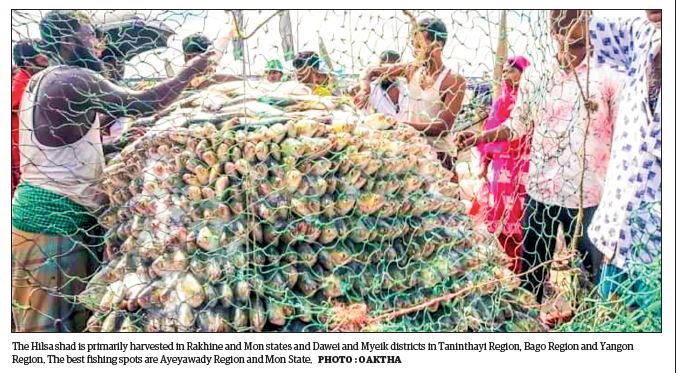
Hilsa shad is primarily harvested in Rakhine State and Ayeyawady Region. Myanmar’s freshwater hilsa earns a better reputation than other saltwater fish. Furthermore, Myanmar achieved success in the artificial breeding of hilsa at a hatchery like the neighbouring countries. Efforts are being exerted for the successful spawning and rearing process. Myanmar needs to capture a strong market share in the international fish market.
Bangladesh is the top hilsa-producing country in the world, generating US dollars from hilsa exports. On-board breeding activities are carried out in the water of India and Bangladesh. Hilsa is the national and commercially valued fish of Bangladesh and contributes to the GDP a lot. Normally, hilsa shad is anadromous fish species, and it lives in the sea and migrates upstream to the freshwater environment of the river system for spawning.
Artificial breeding of hilsa is successful in India and Bangladesh. However, they find it hard to be reared. They banned overfishing and set a fishing season to maintain sustainable production of hilsa. Only those marketable hilsa are harvested to meet the market demand. Fisheries will thrive in sustainable fishing.
Myanmar’s hilsa produced in the Ayeyawady river is of good quality. It is popular in the markets. However, overfishing, including harvesting the small ones, threatens hilsa production. Thanks to effective management, hilsa species survived. Myanmar targets to boost exports of hilsa from controlled breeding and larval rearing in the river water of Ayeyarwady Region and Rakhine State. The number of hilsa declines from fishing in freshwater and sea. Myanmar’s hilsa was on the verge of extinction from overfishing in the previous years.
“The Department of Fisheries researched hilsa. It cannot be farmed yet the hilsa can be alive in controlled breeding in the natural environment. Only artificial breeding status was successful in India and Bangladesh. They failed to rear them. Both Myanmar and the neighbouring countries have not achieved artificial hilsa breeding. Therefore, they have been farmed in the natural environment under a controlled breeding system in a certain area for over 20 years. Breeding of hilsa in nature is the best option so far.
Bangladesh recognizes hilsa as the National Fish and earned a core revenue from exporting. More research activities are required for sustainable hilsa production in Myanmar. All the stakeholders including marine workers and the officials of the department concerned need to exert concerted efforts to make Myanmar’s hilsa a commercially valued export item,” said Dr Tun Thein, director of the Kayah State Fisheries Department.
The Fisheries Department is creating hilsa conservation areas this year during a particular amount of time. Eleven areas in Ayeyawady Region are designated as protected areas throughout the year. Additionally, hilsa conservation period is set in some rivers. Myanmar’s hilsa is exported to Bangladesh. Hilsa eggs are traded in the domestic market, spurring the market. Those hilsa shads which are ready to spawn need protection. That measure can support the livestock sector of the State.
If continuous research activities bring successful breeding of hilsa along with catch in the natural environment, it will create a strong hilsa market, and promote the reputation of Myanmar’s hilsa in the international markets and inflow of foreign currency. — Nyein Thu(MNA)/ GNLM