
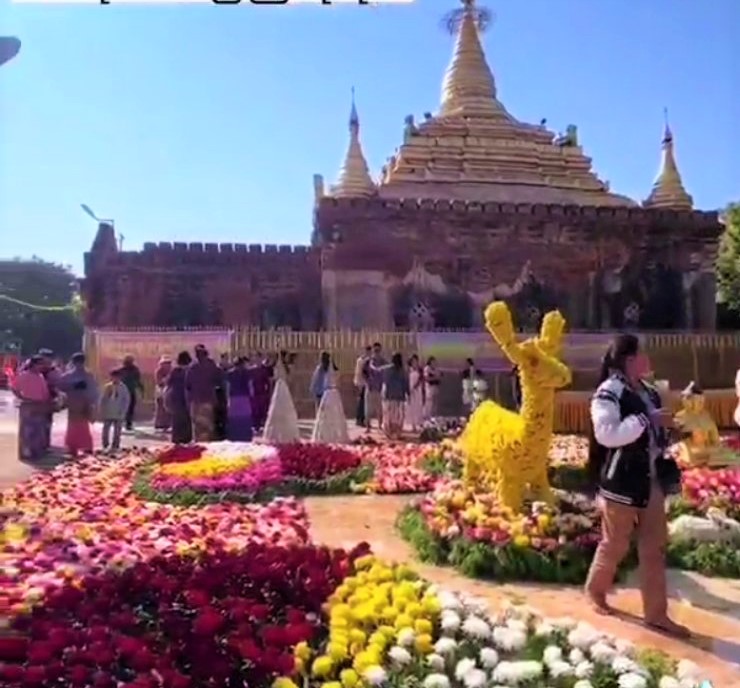
ON New Year’s Day and the full moon day of Pyatho, 1 January 2026, a flower offering ceremony was held at the northern archway of Alodawpyae Pagoda in Bagan, attracting over 10,000 visitors who came to make merit.
“The Myananbon Hotel has hosted the Lotapyaeson Flower Festival annually for six years. The festival is not organized by officials from Alodawpyae Pagoda. On New Year’s Day, Myananbon Hotel donated alms to the pagoda and offers flowers. They also created a page for the public to request flowers for donation. This year, over 10,000 travellers visited the New Year’s Flower Festival. The number of visitors was especially high due to New Year’s Day and the long holidays,” said U Hla Myo, head of office of the Alodawpyae Pagoda Board of Trustees.
In the Bagan Cultural Zone, which is home to numerous ancient cultural sites, several seasonal festivals are held, including the Alodawpyae Pagoda Festival on the full moon day of Nataw in December and the Ananda Pagoda Festival on the full moon day of Pyatho in January. The annual Lotapyaeson Flower Festival at the northern archway of Alodawpyae Pagoda is particularly popular with travellers visiting to make merit.
On 2 January, the full moon day of Pyatho, the Ananda Temple Buddha Pujaniya Festival attracted visitors from nearby villages, who donated alms to the pagoda using monks’ bowls. Pilgrims from Magway, Yenangyoung, Chauk, Myingyan, Meiktila, and Kyaukpadaung townships also attended, selling local products. In addition, participants from 24 villages brought bullock carts carrying offerings and agricultural products, creating a grand festival with a wide variety of food and goods for sale.
During the Alodawpyae Pagoda Festival, held on the full moon day of Nataw, 5,000 fruits and 5,000 flowers are offered to the Buddha Image, and cash donations are given to 528 monks. Each year, on New Year’s Day, various flowers are offered to the Buddha at the northern archway of Alodawpyae Pagoda. This year, over 10,000 pilgrims participated in the flower offering ceremony. — Thitsa (MNA)/ MKKS