
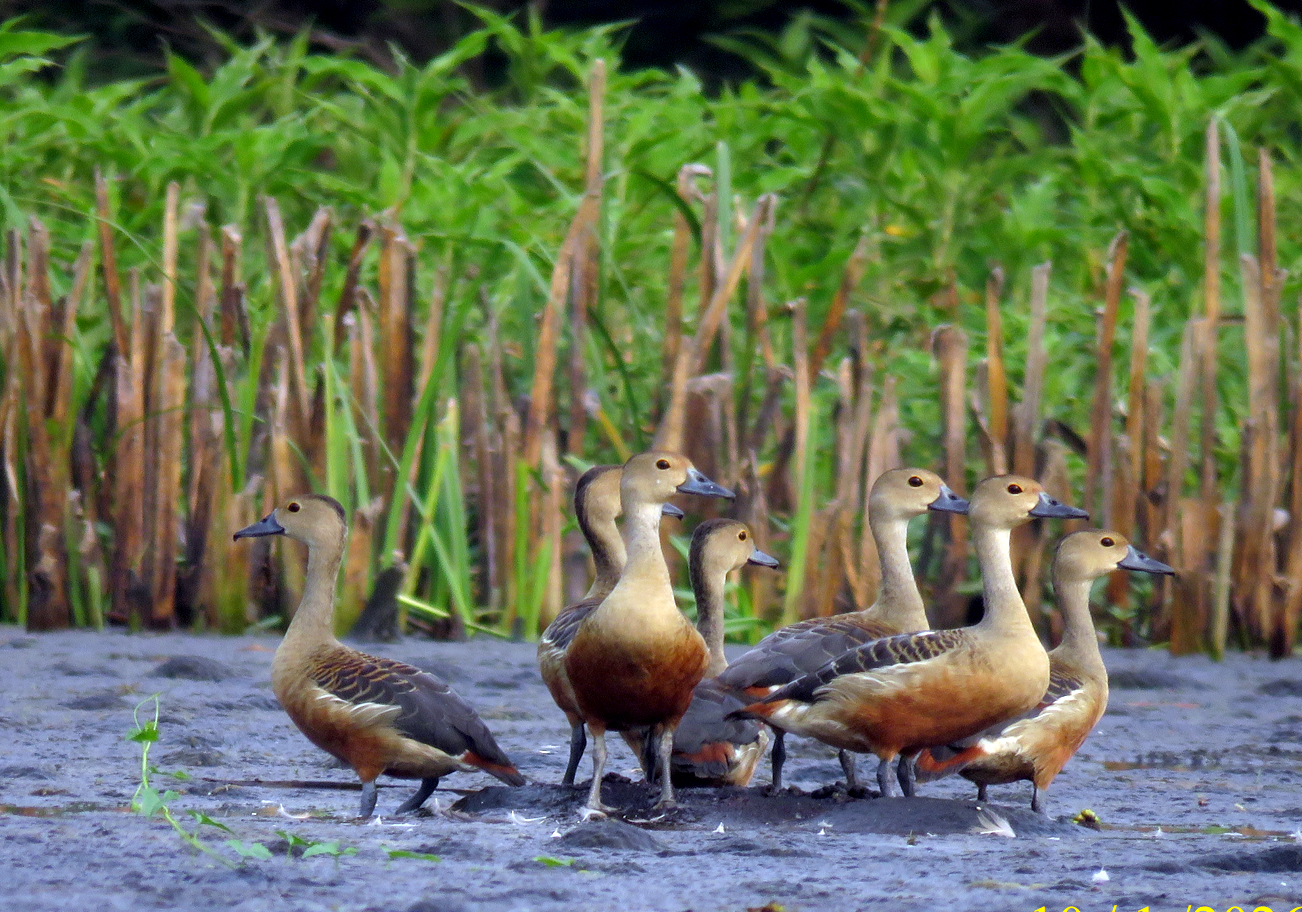
A TOTAL of 46 species of rare migratory waterbirds and resident waterbird species, with a population of 24,177 birds, were recorded after the Asian Waterbirds Census conducted in Indawgyi Lake, the country’s largest freshwater lake, located in Mohnyin Township, Kachin State, in January.
Indawgyi Lake annually becomes a habitat for rare migratory bird species arriving from northern parts of the world and the resident waterbird species during the winter. This year, officials conducted a survey in the east, west and vicinity areas of the lake, and the survey showed 17,275 migratory waterbirds from 29 species and 6,902 resident birds from 17 species, totalling 24,177 birds. The number of migratory waterbirds this winter added 3,970 birds and one additional species compared to last year.
The most commonly observed rare migratory waterbird species in Indawgyi Wildlife Sanctuary included bar-headed goose (4,805), tufted ducks (3,002), common coots (2,159), common cranes (1,768), brown-headed gulls (1,533), black-headed gulls (794), common pochards (505), ferruginous duck (580), and gadwalls (430) whereas the resident waterbird species included whistling ducks (2,532), cormorants (1,200), grey-headed swamphen (1,509), and Tachybaptus ruficollis (460).
These surveys of waterbird species were being conducted in the east and west of the lake, along the Indaw Creek and wetlands.
This year, three bird species not recorded in 2025 – namely the common shelducks (four), Recurvirostra avosetta (three), and Mirafra javanica (six) – were rediscovered and documented.
The Indawgyi Wildlife Sanctuary office stated that migratory bird species have been recorded as arriving annually starting from October. As a result, welcoming activities for migratory birds, including public awareness talks and the installation of signboards, are carried out every year during the second week of October.
Indawgyi Lake became a member of the East Asia-Australasian Flyway on 15 December 2014, and was designated as the country’s second Ramsar Site on 2 February 2016. The lake is home to 47 mammal species, 91 amphibian and crawling animal species, 94 fish species, 105 waterbird species and 400 forest bird species. — Shwe Mohnyin/ KTZH