THE Bagan Archaeological Museum was first opened in 1904 near the northern stairs of Ananda Temple in Old Bagan, and it is recognized as Myanmar’s first museum. In October 1979, an octagonal-shaped archaeological museum was additionally constructed and opened to the south of Kandawpalin Temple. The present world-class archaeological museum was officially opened on 17 April 1998.
The museum features ten exhibition halls, including the Main Special Exhibition Hall, the Bagan-period Architecture Gallery, the Bagan-period Arts and Crafts Gallery, the Bagan-period Palace Gallery, the Bagan-period Literature Gallery, the Bagan-period Daily Life Gallery, the Bagan-period Buddhist Art Gallery, the Bagan-period Buddha Image Gallery, the Bagan-period Temple Mural Painting Gallery, and the Bagan-period Wall Painting Gallery.
In 2017, a Children’s Museum was opened in the octagonal-shaped building located to the north of the main museum.
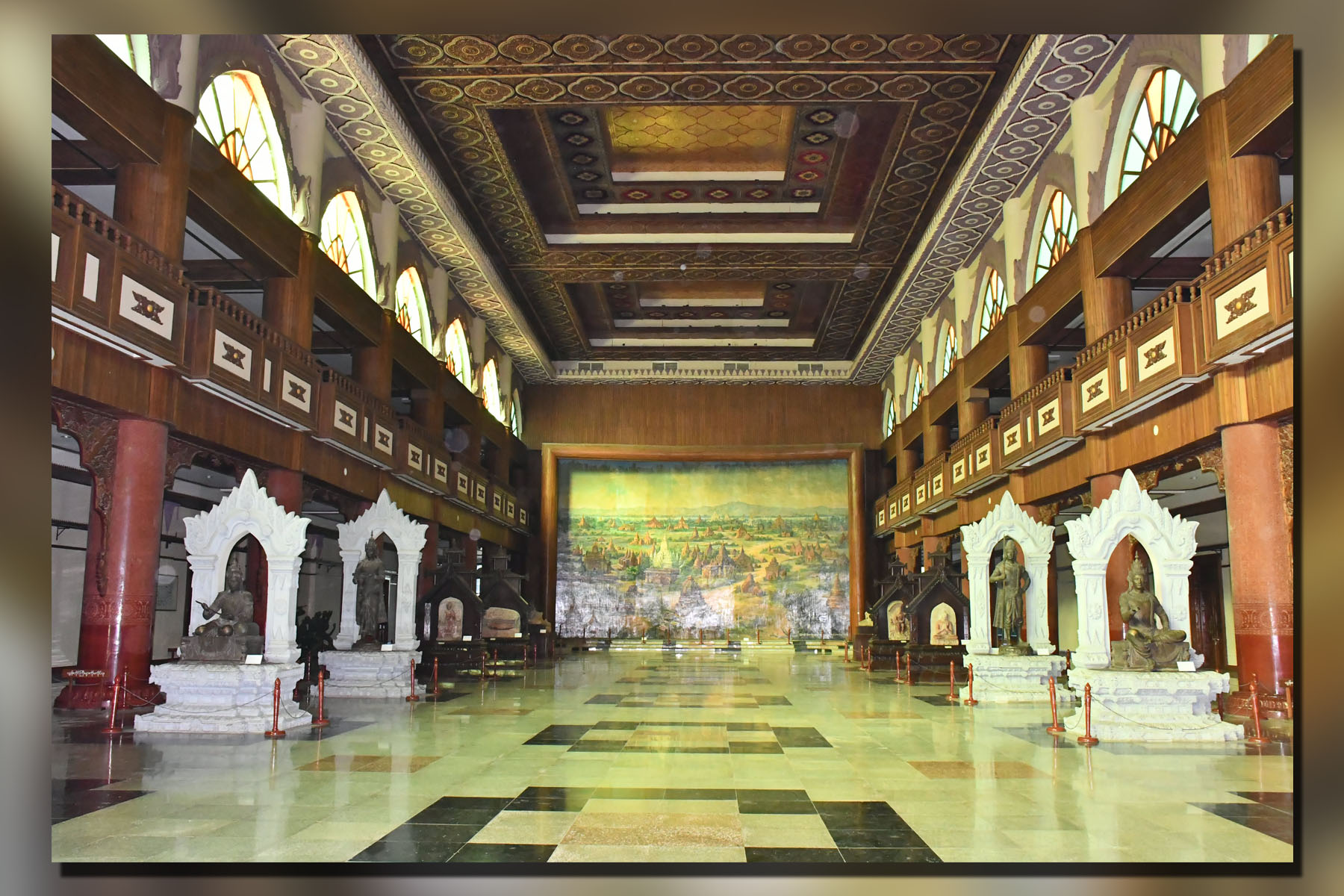
In the Main Special Exhibition Hall, a large three-dimensional panoramic mural depicting the Bagan landscape is displayed, along with eight sandstone-carved panels illustrating major episodes from the life of the Buddha, and bronze statues of four renowned kings of the Bagan period. Visitors can also observe the richly decorated ceiling, which is adorned with traditional Myanmar artistic works, including gilded lacquerware, gold-thread embroidery, wood inlay, wood carving and stucco floral designs.
The eight panels depicting episodes from the life of the Buddha include the Birth of the Buddha by Queen Maya, the Enlightenment beneath the Bodhi Tree, the First Sermon of the Dhammacakkapavattana, the Subduing of the mad elephant Nalagiri, the Descent from Tavatimsa Heaven, the Miracles performed before the Sakyan relatives, the Buddha’s sojourn in the Parileyyaka Forest, and the Buddha’s Parinibbana. — Dipa Lin/MKKS