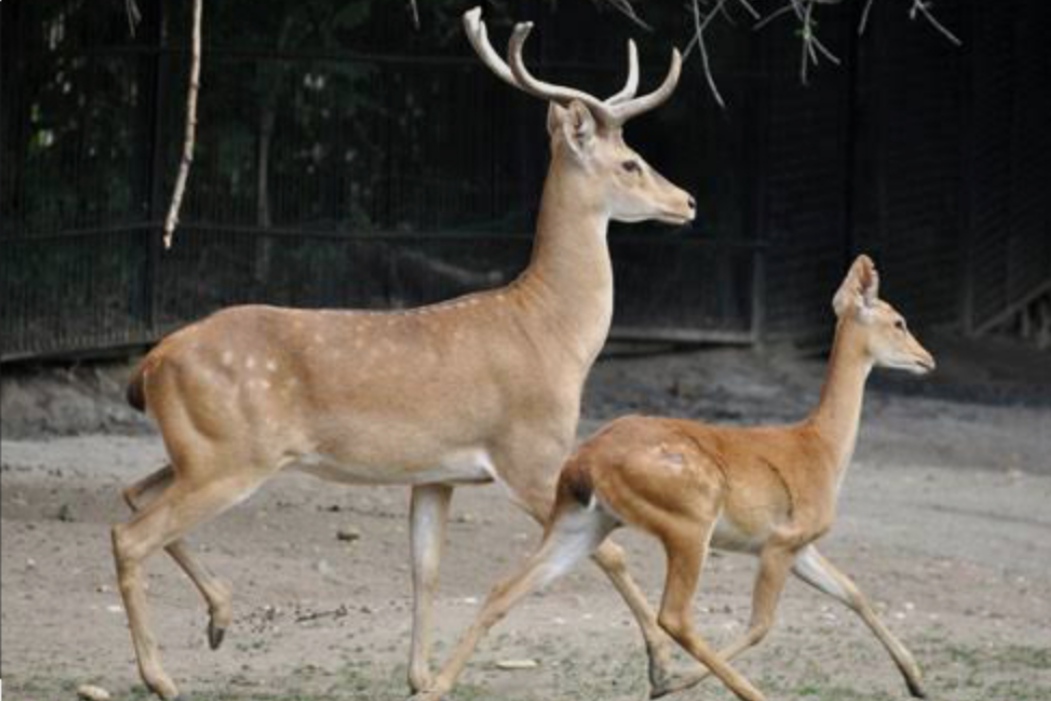
GOLDEN deer are hoofed mammals belonging to the family Cervidae and the order Artiodactyla. Their scientific species is Cervus eldi, which has three subspecies. Biologists refer to the golden deer as Eld’s deer, named after the British army officer Percy Eld, who first discovered the species in 1838 in the valley region of Manipur, India. The deer was later named Eld’s deer in honour of its discoverer.
The Indian subspecies, Cervus eldi eldi, is found only in Manipur. At present, only about 200 individuals remain, and experts estimate that the species may face the risk of extinction. These deer are locally known as Sangai in the Manipuri language. Captive breeding of golden deer has been successfully carried out at the Alipore Zoological Gardens in Kolkata.
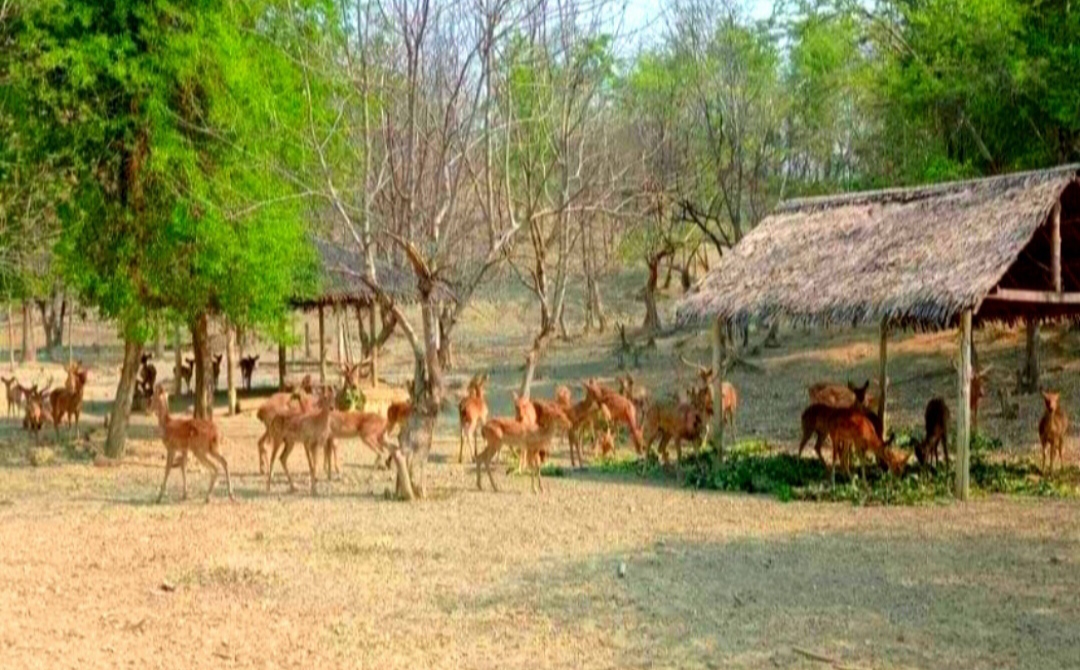
Golden deer are also bred at the Shwesettaw Wildlife Sanctuary. The sanctuary is located in Minbu (Saku) Township and covers an area of 213.4 square miles. It was established in 1985 with the aim of conserving tropical dry forests, and the watershed areas of the Mone Creek and Mann Creek. The sanctuary was primarily created to protect the grazing grounds of Eld’s deer.
Conservation of golden deer at the Shwesettaw Wildlife Sanctuary began in 2012 with five males and seven females transferred from the Nay Pyi Taw Safari Park and the Lawkananda Park. At present, the sanctuary has a total of 55 golden deer, comprising 20 males and 35 females.
The terrain of the Shwesettaw Sanctuary consists of gently undulating hills and slopes covered with sandstone and lies at an elevation of about 300 to 600 feet above sea level. The environment has proven suitable for the deer, which are thriving and reproducing well in the sanctuary. — Zeyar Naing (Shwekanmyay)/KNN