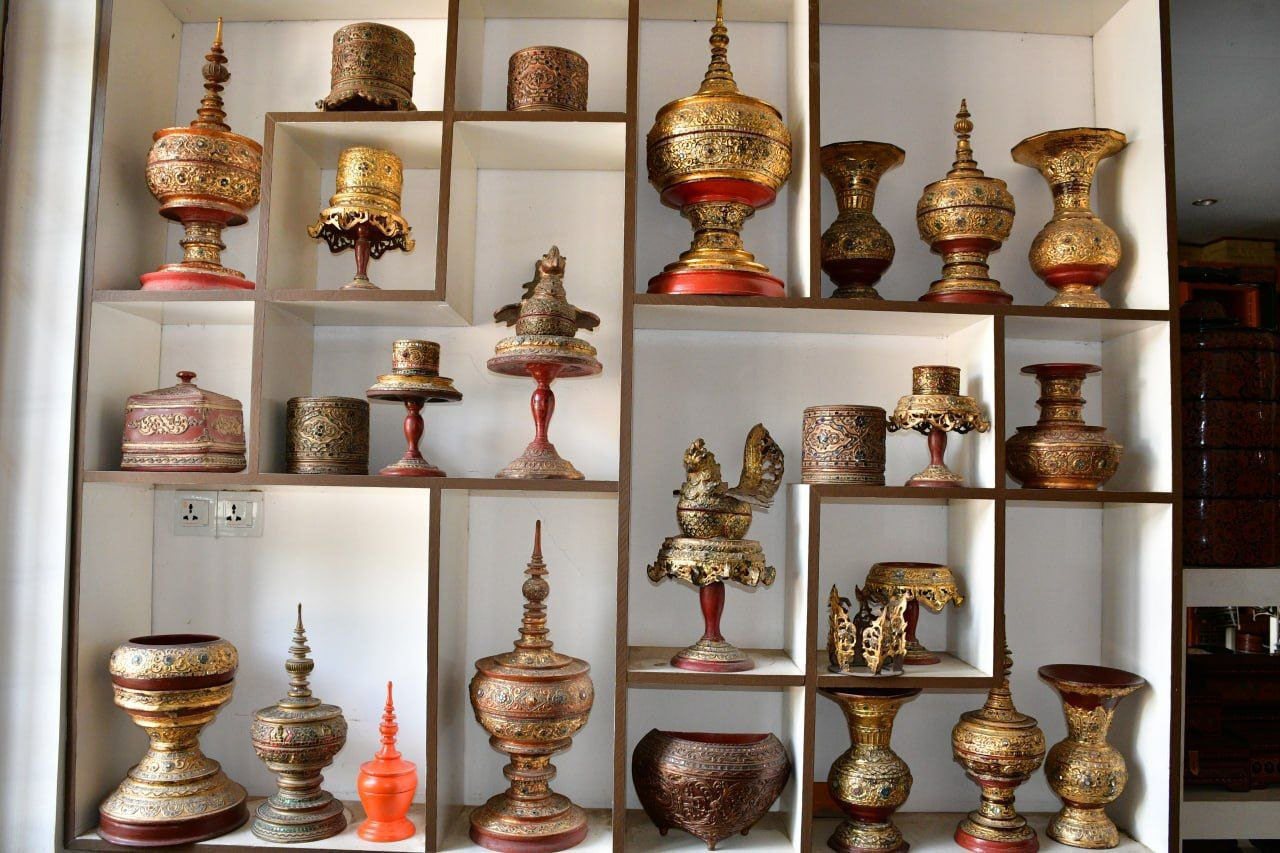
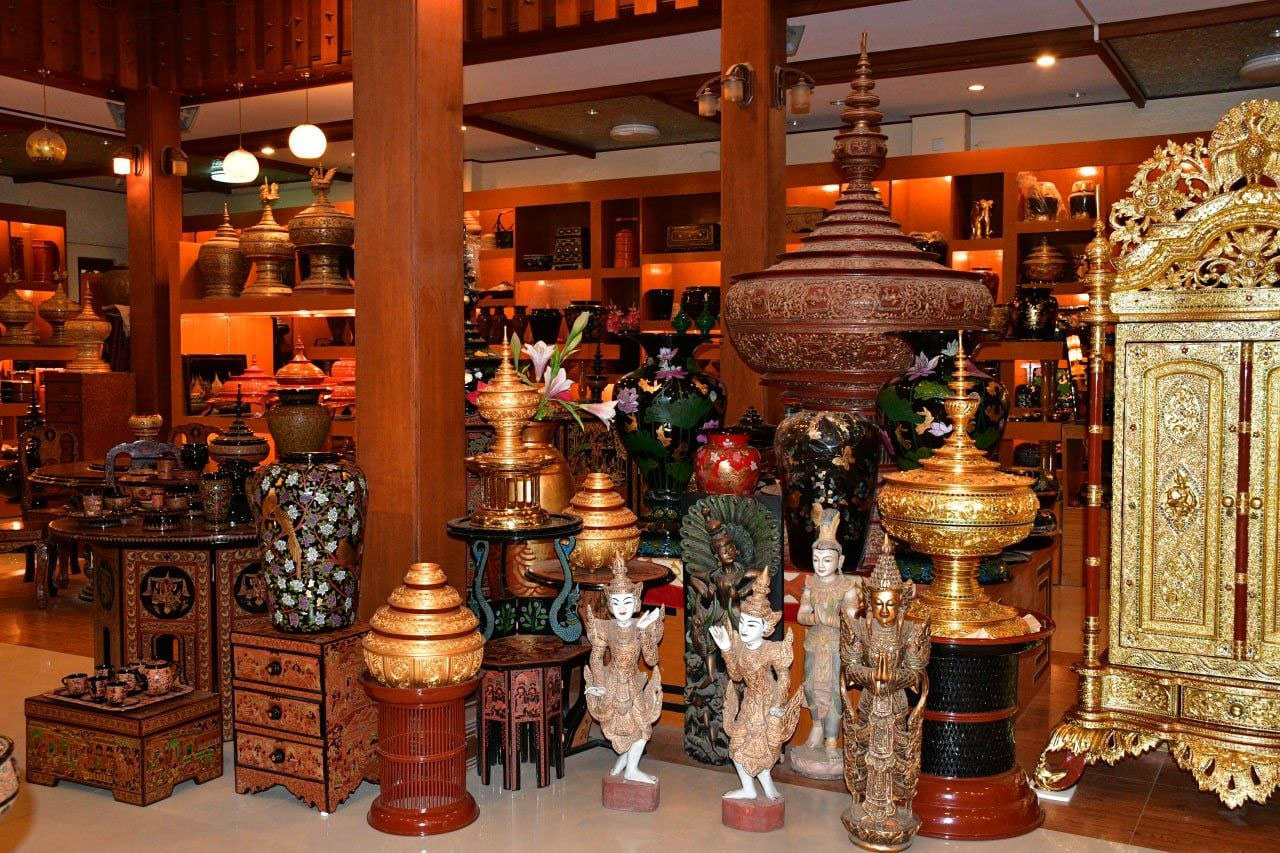
INTEREST in traditional Myanmar lacquerware products from Bagan in NyaungU Township, Mandalay Region, is increasing not only among international visitors but also among domestic travellers. Due to growing local demand, lacquerware business owners have resumed their work continuously, according to the U Ba Nyein Lacquerware workshop owner.
Lacquerware is an authentic Myanmar traditional handicraft that requires highly detailed workmanship. There are more than one hundred types of lacquer products. Among them, lacquer betel boxes and lacquer alms bowls are the most commonly produced items, and the Myanmar people from Bagan to the late Konbaung periods widely used various lacquerware products.
The people donate alms using Palo (aka) five-layer alms bowls to date at Shwezigon, Arnanda, and Hngetpyittaung, Tuyintaung, and Kantawpalin pagoda festivals, and the Shinpin Sarkyo Hla pagoda festival in Sale of Chauk Township in Magway Region.
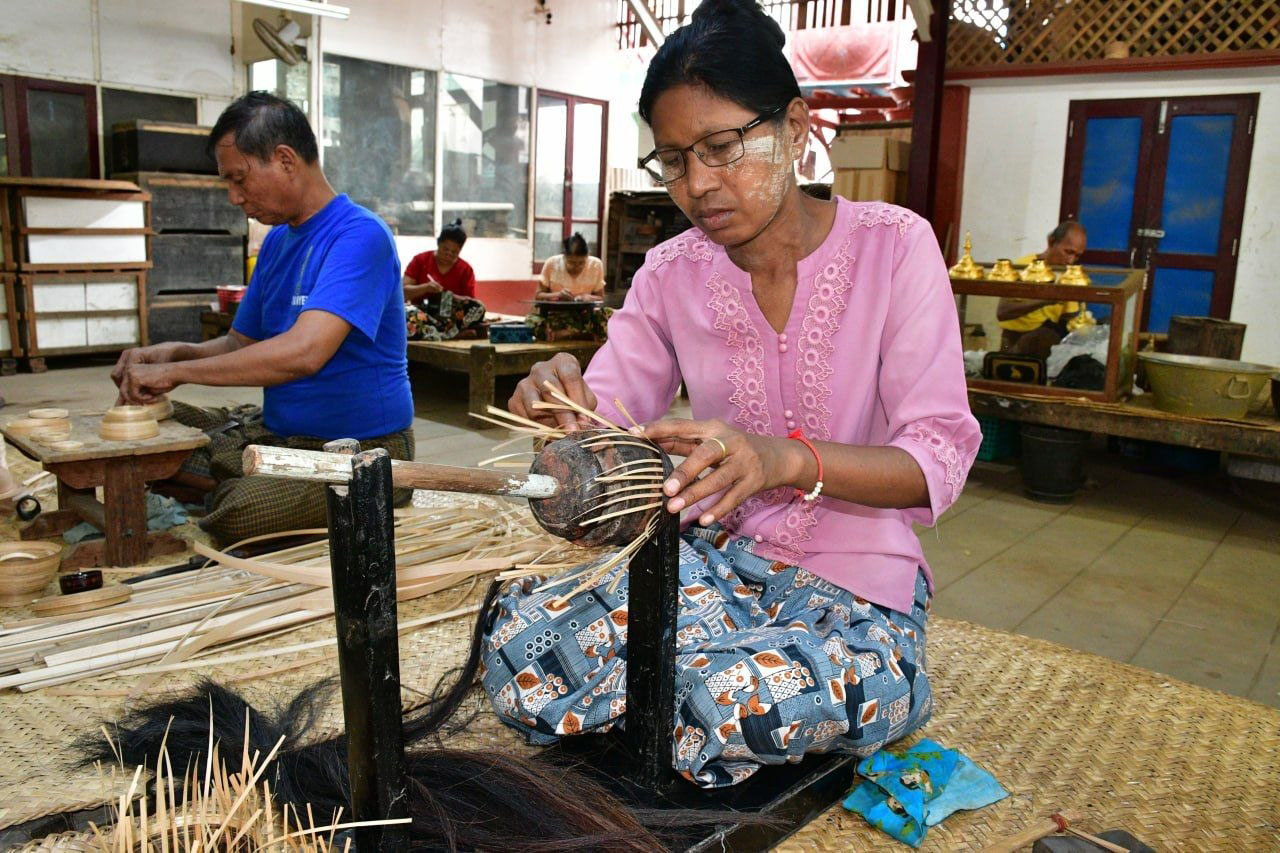
Raw materials used in lacquerware production mainly include various types of bamboo sourced from across Myanmar, such as Metin Kha bamboo, Tin bamboo, Nan Htaung bamboo, and Meza bamboo. However, Metin Kha bamboo is the most commonly and consistently used in lacquerware production.
The production processes of lacquerware include various steps such as smoothing, applying lacquer base, weaving bamboo strips, shaping, coiling, and so on. It costs K1.1 million for a container of resin sap. A lacquerware worker earns around K15,000 per day, while a skilled worker earns about K25,000 per day. Although the products are completed, it takes more than a year before they are ready for sale, as they must be stored in sealed underground conditions to undergo natural curing processes. Despite low sales, business owners continue their operations to support the livelihoods of lacquer artisans and their families.
Interest in Myanmar lacquerware is rising not only among foreign visitors but also among domestic travellers, according to the lacquerware business owners. — Dipa Lin/KTZH