Myanmar and India have agreed on a two-phased trade strategy, targeting $3 billion in bilateral commerce initially before aiming to expand the volume to $5 billion.
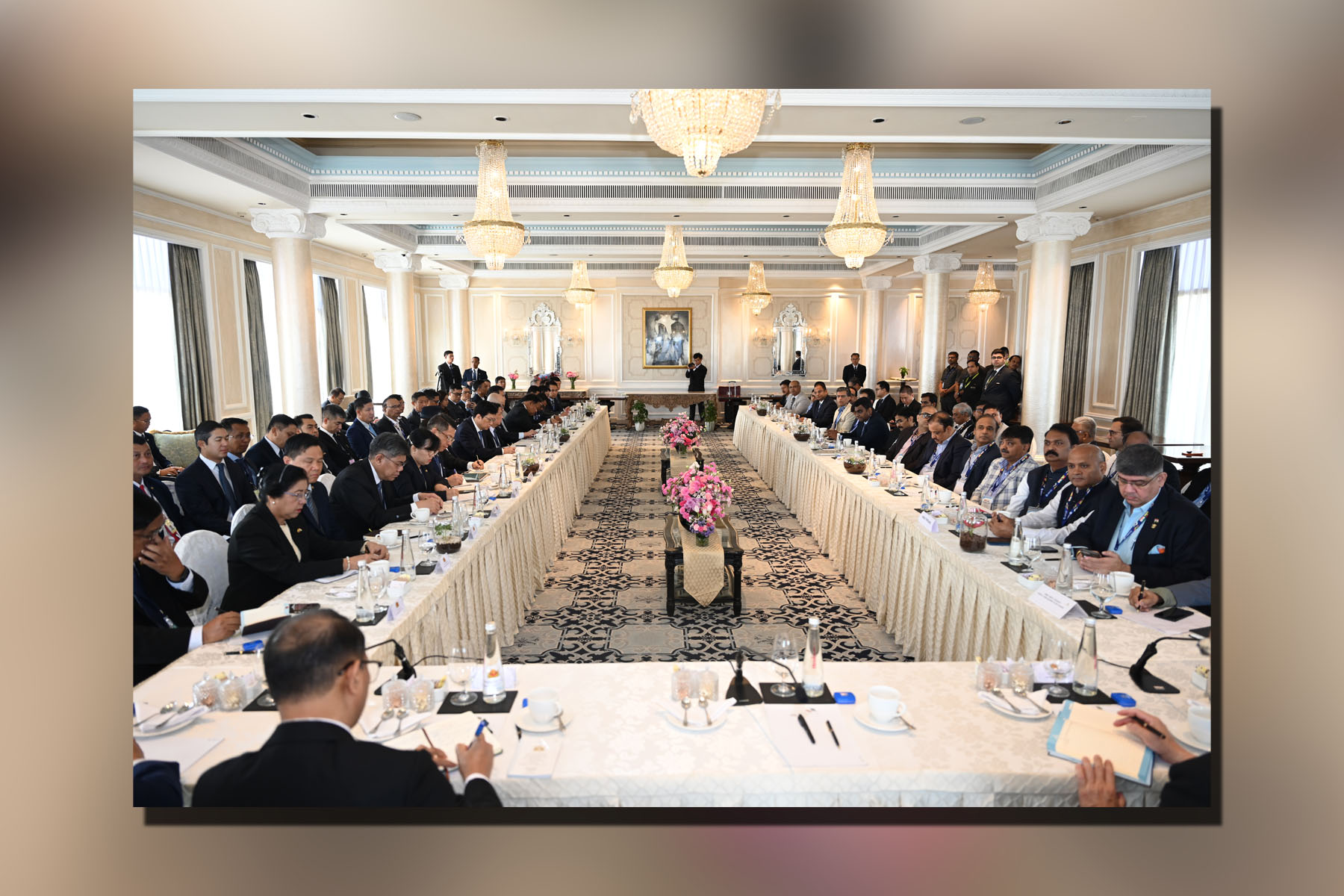
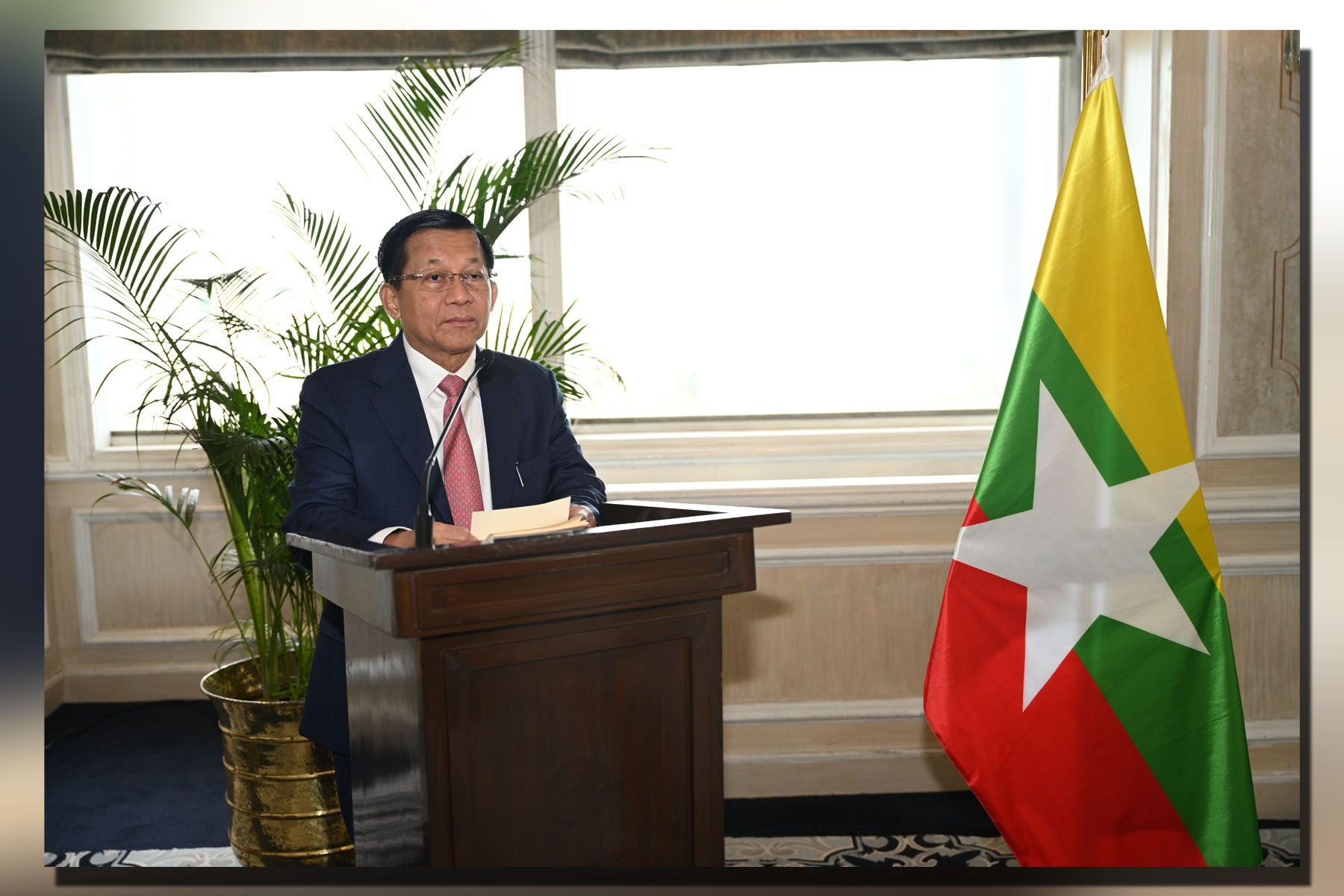
PRESIDENT of the Republic of the Union of Myanmar U Min Aung Hlaing delivered an address at the Myanmar-India Business Dialogue at the Taj Mahal Palace Hotel in Mumbai, India, yesterday morning.
Arriving at the hotel, the President was welcomed by Patron of UMFCCI U Aung Ko Win, President U Aye Win and members, Chairman of the Myanmar-India Friendship Association U Win Myint and members.
In his speech, the President unveiled that this visit serves as a strategic driving force under India’s Act East Policy and Neighbourhood First Policy, aimed at enhancing economic cooperation with Myanmar, as well as promoting trade, investment, and the strengthening of value chains.
Therefore, he said that he would like to emphasize that if Myanmar, as a country with improving political stability, cooperates with India, there will be many opportunities for all parties involved. During the trip, he held meetings with the Prime Minister of the Republic of India, Shri Narendra Modi, and the President of the Republic of India, Smt Droupadi Murmu. In addition, a Myanmar-India trade and investment discussion forum was held in New Delhi, which contributed to the promotion of bilateral economic cooperation and resulted in agreements being reached. In view of these developments, the President affirmed that relevant Indian authorities can now confidently cooperate with Myanmar.
Regarding bilateral trade, the President continued that the exports from Myanmar reached US$1.326 billion in the 2025-2026 financial year, according to figures released by Myanmar. Exports from India were estimated at between US$600 million and US$800 million. India primarily exported pharmaceutical products, petroleum products, chemical products, motor vehicles and related parts, electrical goods, motorcycles and related parts, as well as tractors and agricultural machinery to Myanmar.
During his discussions with the Prime Minister of India, the President noted that bilateral trade had stood at just over US$2 billion. It was agreed to work towards achieving US$3 billion in the first phase and to further aim for US$5 billion in the second phase. It was also agreed to promote bilateral trade by implementing a direct kyat-rupee payment mechanism. He further stated that he had already met with officials of the Reserve Bank of India.
He expressed Myanmar’s desire to increase imports from India, particularly iron and steel, cement, pharmaceuticals, petroleum products, and solar-related equipment. At the same time, Myanmar intends to export pulses and oilseeds, fishery products, forest products, textiles and garment products, as well as rice and rubber.
He also noted that, given the continued flow of pilgrims to Bodh Gaya, there is a strong basis for further expanding the tourism sector. Likewise, there are significant opportunities for India to invest in Myanmar’s education and healthcare sectors.
He noted that India’s investment in Myanmar has exceeded US$94 billion, making it the 11th largest investor among countries investing in Myanmar. Therefore, there are opportunities for investment in sectors such as agriculture and livestock, oil and gas, industry, transport, telecommunications, and services.
He underlined that investment in Myanmar would not only allow production for the domestic market but also enable the export of certain products to neighbouring countries such as Laos, Vietnam, and Cambodia. He further stated that India’s high-tech industries, including pharmaceutical manufacturing, could be established in Myanmar. Given Myanmar’s electricity demand, there are also significant investment opportunities in the power sector.
He added that diplomatic relations between the two countries have now reached 78 years and will mark their 80th anniversary in 2028. As part of commemorating the 80th anniversary of diplomatic relations, he expressed the desire to further enhance and promote bilateral trade activities.
Indian entrepreneurs discussed that the current visit of the President to India will further enhance friendship and cooperation between the two countries. They also emphasized the need to further expand cooperation between the two countries in areas such as technology, investment, bio-energy production, mining, and the production of agricultural machinery and fertilizers required for the agricultural sector.
In response, the President invited investment in the bio-energy sector. Regarding mining, it would be more beneficial to produce value-added finished products for export rather than exporting Myanmar’s mineral resources as raw materials. He further noted that Myanmar is a country that prioritizes the agricultural sector and therefore welcomes investments in activities that can effectively and practically contribute to the development of agriculture.
The business dialogue was also attended by Union ministers and delegation members, officials from the Indian government, the Myanmar Ambassador to India, the Indian Ambassador to Myanmar, the Patron of UMFCCI and party, the Chair of Myanmar-India Friendship Association, Myanmar and Indian businesspeople and guests.
The President visited the Gateway of India, Mumbai. Officials escorted him around the gateway.
The Gateway of India, Mumbai, is a world-famous historic monument located on the Mumbai beach, India. It was built to commemorate the first visit of King George V and Queen Mary of the United Kingdom to India in 1911, marking the spot where they first set foot in the country. Construction began in 1915 and was completed in 1924. After India gained independence in 1948, the last remaining British regiments departed from India by sailing through this archway, making it a symbolic site representing the end of British rule. The structure’s architecture is of the Indo-Saracenic style, which blends 16th-century Gujarati Islamic and Hindu traditional architectural elements. It is built using yellow basalt stone, and the central arch rises to a height of approximately 85 feet. The Gateway of India is regarded as an iconic landmark of Mumbai, often referred to as “the Taj Mahal of Mumbai”, and remains a major tourist attraction visited with great interest by travellers from around the world.
The President and party arrived at the Chhatrapati Shivaji Maharaj International Airport and viewed the work procedures of the airport. — MNA/TTA