
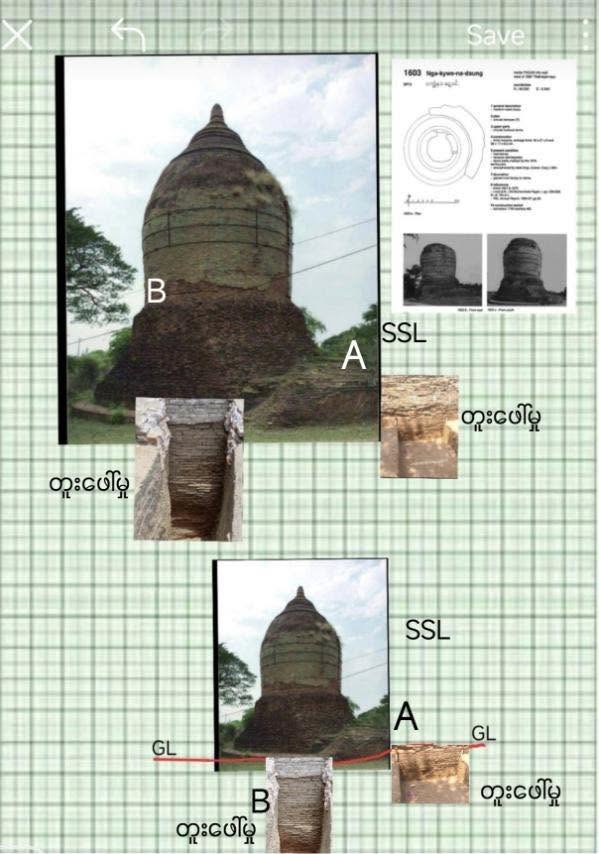
THE Department of Archaeology and National Museum (Bagan Branch) has launched a study into the structural foundations of the Ngakywe Nadaung Pagoda, Paukpinya Pagoda, and Ancient Building 1905 to safeguard the World Heritage Site’s architectural legacy.
While the architectural and artistic features of Bagan’s ancient monuments, built over successive periods, can be observed above ground, studies are now underway to gain a better understanding of their foundation systems. The research focuses on three structures from different periods: Ngakywe Nadaung Pagoda (11th Century AD), Paukpinya Pagoda (12th Century AD) and Ancient Building 1905 (13th Century AD).
The Bagan World Heritage Site contains 3,595 ancient monuments within the property area and a further 242 within the buffer zone, bringing the total to 3,837.
Historical records and archaeological evidence indicate that Bagan was a magnificent city with a highly developed culture between the 11th and 13th centuries AD.
The heritage values of the Bagan World Heritage Site remain intact. Its significance lies not only in its individual monuments but also in its preservation as a unified ancient city, recognized internationally for its outstanding cultural heritage. — ASH/MKKS