
By Augustin
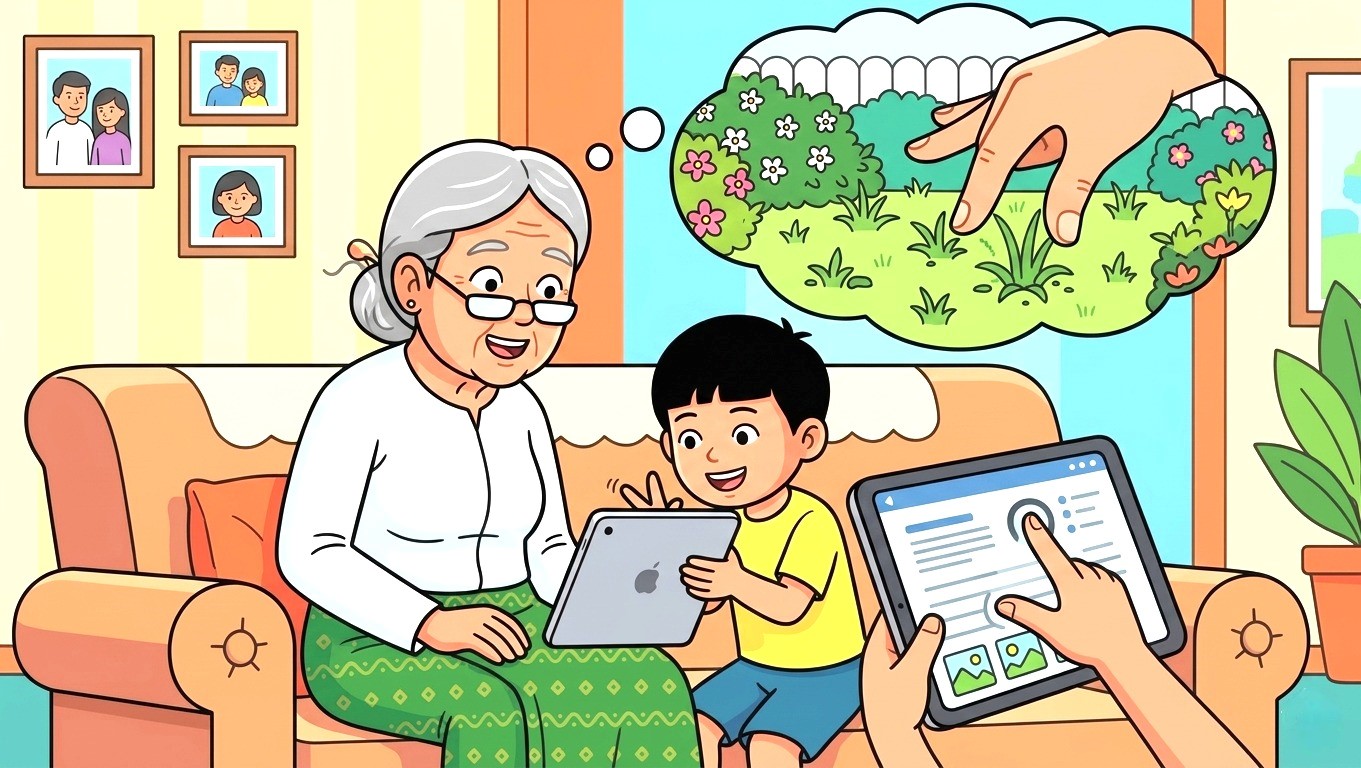
A HEARTWARMING interaction between a grandson and his grandmother serves as a profound parable for our modern digital age. While learning to use an iPad, the grandmother misplaces her reading glasses. Promptly, her grandson demonstrates the intuitive "pinch-to-zoom" gesture, stretching the words across the glass interface. "Grandma, don't look for your glasses," he tells her. "Look at this! If you stretch the words like this, they become very big."
The grandmother’s response is both witty and layered with sharp sarcasm: "Oh wow, what a smart machine! By the way, can I also stretch and delete the weeds in my front garden like this?"
Her simple observation exposes a deep truth about contemporary society: we increasingly believe that technology can solve every human dilemma. However, real-life problems cannot be coded away. As Apple co-founder Steve Jobs famously remarked, "Technology is just a tool." An iPad can magnify text at the touch of a finger, but the weeds in a garden still demand that we roll up our sleeves, bend down, and pull them out by hand.
The Limitations of "Zooming In"
In our hyper-connected digital world, "zooming in" on data or magnifying our view is effortless. Yet, we cannot simply "zoom out" or swipe left to escape the unavoidable responsibilities of physical reality. No matter how advanced our operating systems become, the fundamental rule of human existence remains unchanged: true accomplishment requires physical effort and sweat.
Technology acts merely as a pair of "fancy glasses". While it can dramatically improve our vision and grant us access to vast reservoirs of information, it lacks the agency to clear away the literal and metaphorical thorns in our yards. The grandmother’s weeds represent our daily real-world duties. Human beings must remain masters of their labour rather than allowing their machines to master them. When we rely too heavily on digital shortcuts, technology morphs into "poisoned honey" — an alluring convenience that ultimately breeds psychological and physical laziness.
The Paradox of Technology
Today, technology gives us incredible power. With just a single tap on a screen, we can conttrol information and buy things instantly, almost like magicians. However, this power has a downside. Instead of us controlling the technology, we have become dependent on it, acting almost like mindless robots serving the very systems we built.
The "Google Effect"
The "Google Effect" (also known as digital amnesia) is the tendency of our brains to forget information that can easily be found online using a search engine.
Instead of remembering the actual fact, our brain prioritizes remembering where or how to find that fact.
Because we can look up anything instantly, our brains are changing. Studies show that we no longer bother remembering facts; we only remember how to find them. We treat search engines like an external brain. Just like a muscle or a metal blade gets weak and rusty when it isn't used, our natural memory and thinking skills are dulling from lack of practice.
The Dopamine Loop
Social media and applications (apps) are designed to hook us by giving us instant rewards. Every time we get a like, share, or notification, our brain releases a feel-good chemical called dopamine. While this feels good for a moment, it harms our focus over time. It breaks our attention span into tiny pieces, leaving us mindlessly scrolling through screens instead of working on our real, meaningful life goals.
Physical Health Risks
Technology allows us to buy groceries, manage our homes, and work without ever getting out of our chairs. While this is highly convenient, it is quietly ruining our health. We move so little now that the World Health Organization (WHO) has named physical inactivity as one of the top ten leading causes of death worldwide.
Human diligence
Ultimately, while technology reshapes the landscape of human capability, it cannot alter the core human condition. Digital tools should amplify our capacity to live, not replace the vital, sweat-inducing effort required to maintain our health, our minds, and our surroundings. You can swipe away a notification on a glass screen, but real-world challenges must still be confronted with the timeless, irreplaceable weapon of human diligence.