
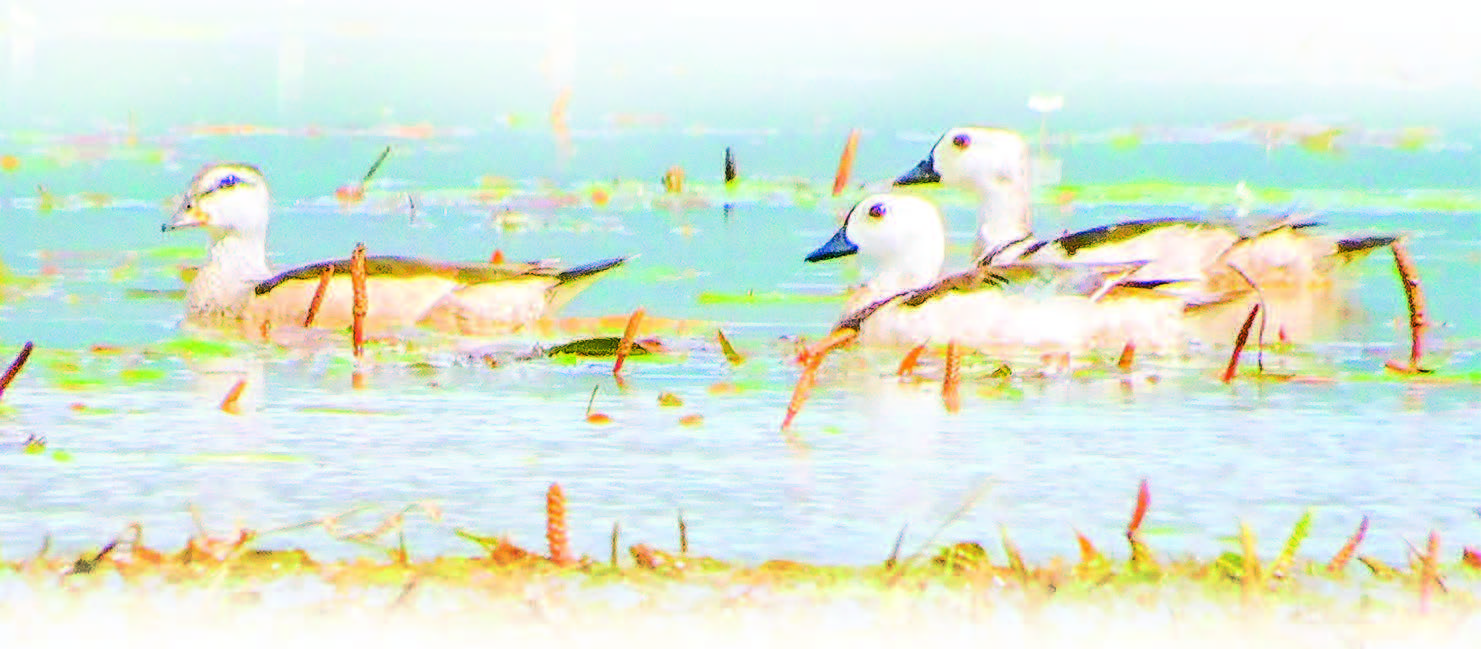
In the northern part of the world, wintering birds breed before migrating southwards to escape the cold. Thirty-four species of wintering and migratory birds, including rare species, reportedly enter the Ramsar regions of Inlay Lake.
In Inlay Lake, two species of seagulls, Eurasian coots, pochards, tufted ducks, and other world-rare species of birds migrate. Therefore, they are monitored and maintained within eight waterfowl conservation grazing areas.
The wintering birds migrate to Myanmar annually, moving from Siberia to Inlay Lake. Additionally, wintering and migratory birds from China and Russia predominantly enter Indawgyi Lake and return northwards in April.
Every year, migratory birds from cold regions fly a thousand miles southward to avoid the cold and return to their place of origin. However, the birds face difficulties annually, encountering natural disasters and artificial dangers on their journey. As a result, the complete number of wintering birds cannot reach their places of origin. Wild sanctuary staff record and make lists to protect rare wintering bird species, managing the conservation of these rare species.
“Six rare species of wintering birds are arriving at Inlay Lake. They include some pochard species that are in danger of disappearing. We found only three pochards last year; now, two are starting the winter season. The migration of the world’s rare wintering bird species to our country is honourable and interesting to international bird watchers. Almost 15 red-headed cranes entered in the last ten years, but only two did last year. As for pochards, there were about ten a few years ago, but now there are fewer than in previous years. Inlay Lake has ample water this year, and some wintering birds remain. They can continue, and we are also actively engaged in wintering and migratory bird conservation. The biodiversity migration of the world’s rare species in Myanmar increases the value of international conservation,” said U Tin Mya Soe, administrator of the Inlay Lake Wild Sanctuary.
The nine central flyways to avoid the northern winter and move to the southern regions are the East Atlantic Flyway, the Black Sea-Mediterranean Flyway, the Mississippi-America Flyway, the Atlantic-America Flyway, the Pacific-America Flyway, the West Pacific Flyway, the East Asia-Australia Flyway, the Middle Asia Flyway, and the West Asia- East Africa Flyway. Over 300 bird species migrate yearly from the East Asia-Australia Flyway to the Middle Asia Flyway.
About 18,000 bird species worldwide are divided into four groups, including wintering birds. Among these 18,000 bird species, 1,136 species of birds live in Myanmar, according to the Biodiversity and Nature Conservation Association (BANCA). All bird species live worldwide; only about 3,000 species migrate depending on the seasons.
Fourteen essential bird species are recorded, with 6,773 birds of 95 forest bird species, 9,938 birds of 42 water bird species, and 4,236 birds of 34 wintering bird species grazing in the Inlay Lake Wild Sanctuary area. Wintering and migratory birds migrate and feed in the regions of Indawgyi Lake, Inlay Lake, Moeyungyi, Mainmahla Island, Plate Lake, Taungthaman Lake, Pyukon Lake, and Banaw Lake every year, attracting tourists and making our country proud to be a grazing country for the world’s rare wintering birds. — Nyein Thu/TRKM