22 August
The Myanmar Motion Picture Museum (MMPM) is undergoing an upgrade to enable movie buffs and the general public to learn about the history of Myanmar movies, which have enjoyed great popularity across ages, through six galleries featuring six different themes.
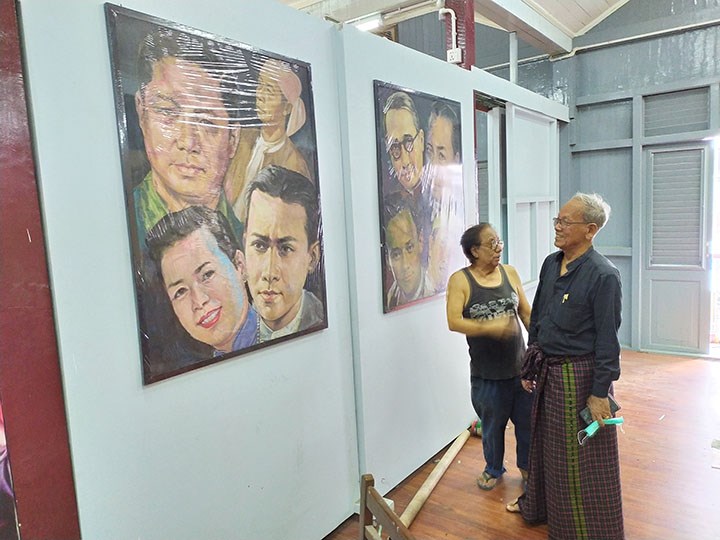
Currently, the building located on Wingaba Street in Bahan Township of Yangon is being renovated. While work on the outer building has been completed under the supervision of the Myanmar Motion Picture Organization (MMPO), work on the interiors and other minor repairs are under way. Research on the history of movies is also on.
“The MMPM plans to showcase the history of Myanmar movies. Currently, we are doing the renovation. The renovation is expected to be completed in October. As it is a historical museum, we have to be careful while conducting research. So, it will take a bit more time. This museum will showcase the history of movies. The museum will be visited by actors and audiences as well as the general public. As history can be forgotten after a long time has passed, we are doing detailed historical research,” said U Aye Kyu Lay, the vice chairman of the Myanmar Motion Picture Organization.
“The MMPM was opened in 1998. At the time, it was crowded with visitors. Afterwards, the museum was shut down temporarily. Now, we are renovating to reopen the MMPM,” said U Aye Kyu Lay.
The museum will now have six galleries, featuring the 1920-1945 era (silver jubilee), the 1946-1970 era (golden jubilee), and the 1971-1995 era (diamond jubilee); the 100th anniversary of Myanmar movies; academy award presentations from 1952 till the present time; and the filmmaking industry. While three of the six showrooms will be situated on the upper floor, the remaining will be on the ground floor.
The MMPM will showcase photos of famous actors and actresses of all periods, historical films, antique cameras, flashguns, and broadcasting devices to help visitors widen their scope of knowledge about Myanmar movies, according to the Myanmar Motion Picture Organization, Yangon.—Myint Maung Soe (Translated by Hay Mar)