By Yin Nwe Ko
UNION Day in Myanmar, celebrated annually on 12 February, is more than a commemoration of the 1947 Panglong Agreement. It is a living symbol of the country’s aspiration for unity among diverse ethnic groups, cultures, and traditions. In 2026, Union Day arrives at a particularly significant moment: just weeks after the 2025-26 general elections, which unfolded in three phases between December 2025 and January 2026. The results, led by the Union Solidarity and Development Party (USDP), mark the beginning of a new political chapter. This convergence of historical remembrance and contemporary governance offers Myanmar an opportunity to reflect on the meaning of unity in both heritage and future leadership.
Union Day: Historical Resonance
The Panglong Agreement of 1947 stands as a cornerstone in Myanmar’s journey towards national unity. Signed by General Aung San and representatives of major ethnic groups, including Shan, Kachin, and Chin, it was a visionary pact that laid the groundwork for a federal union based on mutual respect, equality, and cooperation. The agreement recognized the distinct identities and rights of ethnic nationalities while affirming their shared commitment to forming a unified nation. Though challenges have followed in the decades since, the spirit of Panglong continues to inspire calls for inclusive governance and peaceful coexistence.
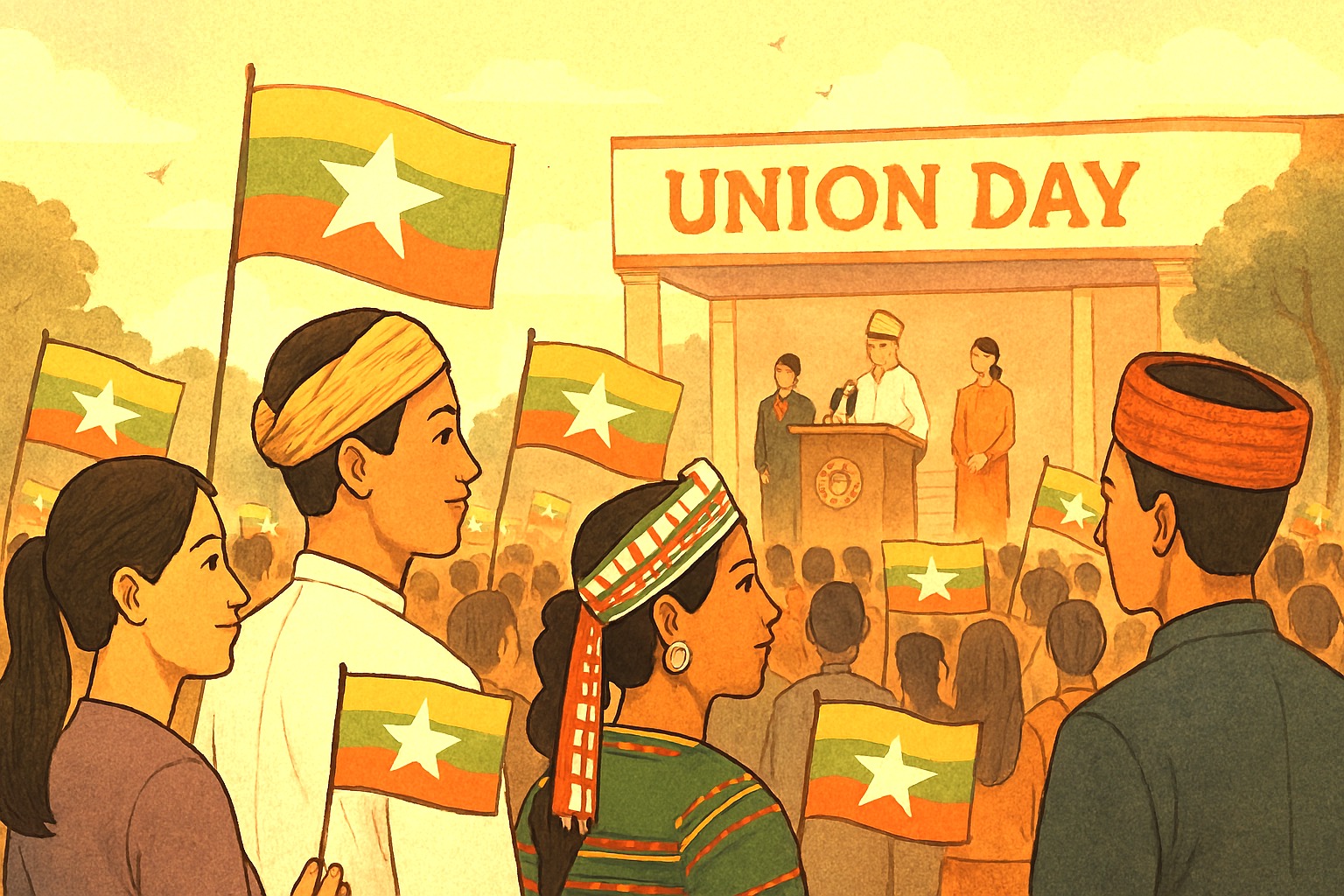
Union Day, celebrated annually on 12 February, serves as a powerful reminder of Myanmar’s rich diversity. The country is home to more than 130 ethnic groups, each with its own language, customs, and traditions. From the Bamar heartland to the highlands of the Shan, Kachin, Chin, and Kayin peoples, Myanmar’s cultural mosaic is both vibrant and resilient. Union Day invites citizens to reflect on this diversity not as a source of division, but as a strength that enriches the national identity. It is a day to honour the idea that unity does not mean uniformity, and that true solidarity embraces difference.
The ceremonial importance of Union Day is felt across the country, from bustling cities to remote villages. Schools organize essay contests and debates on unity, while communities host cultural performances showcasing traditional dances, music, and attire. Government offices hold formal events where leaders speak about the values of cooperation and national harmony. These celebrations are not merely symbolic — they reinforce the collective memory of the Panglong spirit and encourage ongoing dialogue about federalism, inclusion, and peace. Union Day thus becomes both a historical commemoration and a living civic tradition, reminding all citizens of their shared responsibility to build a more united and equitable Myanmar.
Union Day is not only about looking back but also about imagining how unity can be reinterpreted in modern times. In 2026, this imagination is shaped by the results of the elections and the governments that will emerge.
A Turning Point
The 2025-26 general elections in Myanmar unfolded across three distinct phases, reflecting both logistical planning and the country’s commitment to broad civic participation. The first phase took place on 28 December 2025, followed by the second on 11 January 2026, and the final phase on 25 January 2026. This staggered approach allowed for greater accessibility across regions and ensured that voters from diverse backgrounds could engage in the democratic process. The elections were held amid anticipation and reflection, as citizens considered the future direction of governance and national unity.
The Union Solidarity and Development Party (USDP) emerged as the leading political force in this electoral cycle. With historical ties to governance and a platform emphasizing stability and development, the USDP secured a majority in both houses of parliament, positioning itself to form the next government. This outcome was met with a mix of celebration and cautious optimism, as communities across Myanmar looked to the incoming administration to address key issues such as infrastructure, education, and interethnic cooperation. The party’s victory also signalled a continuation of familiar leadership styles, with potential for renewed focus on national integration.
At the time of the elections, the presidency was vacant, creating a unique moment of transition. The new government is expected to consolidate leadership under the USDP, appointing key figures to guide policy and administration in the coming years. This leadership shift presents opportunities to align governance with the values celebrated on Union Day – particularly unity, inclusion, and federal dialogue. As Myanmar steps into a new political chapter, the convergence of electoral results and Union Day observance offers a symbolic reminder that leadership is not only about authority but about fostering cooperation across all segments of society.
Within Myanmar, the focus remains on how governance can contribute to stability, development, and unity. For Union Day, this means reflecting on how the new government can embody the spirit of Panglong in contemporary practice.
Interwoven Narratives
Union Day and the elections intersect in meaningful ways:
• Unity in Diversity: Just as Panglong sought to unite ethnic groups, the new government faces the challenge of ensuring representation and inclusion across Myanmar’s diverse regions.
• Federal Aspirations: The symbolism of Union Day reminds leaders of the importance of federal principles, balancing central authority with regional autonomy.
• Youth Engagement: With half of Myanmar’s population under 30, Union Day celebrations increasingly highlight the role of young citizens in shaping the future. The elections, too, underscore the importance of youth participation in civic life.
Fresh Perspectives on Union Day 2026
To make Union Day resonate with today’s citizens, new ideas can be introduced:
Civic Storytelling Festivals
Communities could host storytelling events where citizens share personal narratives about unity, resilience, and cooperation. These stories, collected across ethnic lines, would embody the spirit of Panglong in everyday life.
Union Day and Digital Citizenship
In an era of technology, Union Day could highlight digital platforms that connect citizens across regions. Online forums, educational apps, and civic engagement tools could serve as modern “Panglong tables”, fostering dialogue and collaboration.
Youth Parliaments on Union Day
Schools and universities could organize mock parliaments where students debate issues of unity, governance, and federalism. This would not only honour the historical roots of Union Day but also prepare the next generation for leadership.
Cultural Bridges
Union Day could feature “cultural bridges” — events where ethnic groups exchange traditions, foods, and art. Such exchanges would symbolize the ongoing weaving of Myanmar’s diverse cultural fabric.
Elections and the Future Government: Opportunities Ahead
The USDP’s victory sets the stage for a government that will likely emphasize continuity and stability. In the context of Union Day, this offers several opportunities:
• Policy Alignment with Unity: The government can align its policies with the spirit of Union Day, focusing on inclusive development, infrastructure in ethnic states, and cultural preservation.
• Strengthening Federal Dialogue: Union Day could serve as an annual reminder for the government to engage in dialogue with ethnic leaders, reinforcing trust and cooperation.
• Educational Initiatives: By supporting civic education programs tied to Union Day, the government can nurture a generation that values unity and democratic participation.
Union Day as a Civic Compass
Union Day is not merely ceremonial; it can serve as a civic compass guiding governance. The elections remind citizens that governments change, but the aspiration for unity remains constant. By embedding Union Day values into policy, Myanmar can ensure that governance reflects the nation’s deepest ideals.
Union Day 2026 arrives at a crossroads: a historical commemoration intertwined with the emergence of a new government following the 2025-26 elections. The USDP’s victory signals continuity, while Union Day reminds Myanmar of the timeless need for unity in diversity. Together, they create a narrative of hope, resilience, and forward-looking governance.
As Myanmar celebrates Union Day this year, citizens can reflect not only on the past but also on the possibilities ahead. By embracing new ideas — storytelling, digital citizenship, youth parliaments, and cultural bridges — Union Day can remain vibrant and relevant. And by aligning governance with the spirit of Panglong, the new government can ensure that unity is not just remembered but lived, shaping Myanmar’s journey into the future.